

The H.O.M.E. wood bank was designed for such emergencies. It is small, providing “bridge assistance,” often while people wait for state services. Ms. Hair said she expected increased need this winter. “There are people who wouldn’t qualify for state heating assistance, but desperately need some help this year because of Covid,” she said, right before dashing inside to put on warmer socks. “We don’t want more people to come into homelessness.”
Ms. Hair said she expected climate change to increase need as well. Warming temperatures — the state’s average annual temperature has risen 3.2 degrees Fahrenheit since the late 1800s, according to a 2020 report by the University of Maine — have led to more winters without an insulating blanket of snow. “In an open winter, pipes tend to freeze more,” said Ms. Hair, noting that people who live in trailers are particularly vulnerable to such damage.
Severe weather events, like the snowstorms that have hit Texas, can trigger major power failures, which have been on rise, according to a report by Climate Central. As part of their climate resiliency plans, at least a few Northeastern towns have recommended creating wood banks for when the grid fails.


In an interview on Bulgarian national television yesterday, Nirmal Purja confirmed that the Nepali team fixed all the upper sections of K2 as they headed for the summit.
“On the previous rotation we fixed from Camp 2, and on the summit day we fixed everything to the summit, and that’s purely because I knew we would be descending in the night,” said Purja. He added that they had previously planned to fix the whole route for safety reasons.
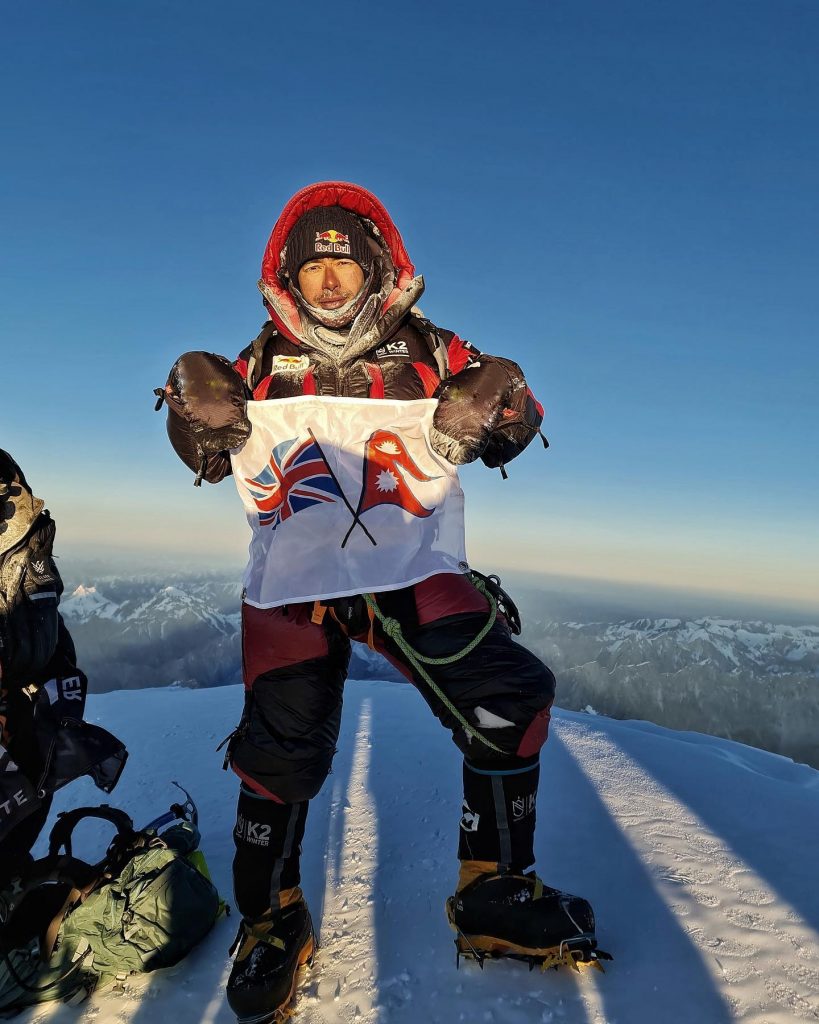
Purja on the summit of K2.
Purja’s comments echo Mingma G’s, who mentioned that descent was rather straightforward, thanks to the fixed ropes.
This contradicts Pakistani climbing legend Nazir Sabir’s recent speculations. Last week, Sabir accused the Nepali climbers of retrieving the ropes as they returned from the summit, implying that this could have affected the safety of John Snorri, Ali Sadpara, and Juan Pablo Mohr, who went missing during their own summit push on February 5.
Purja declined to comment about what happened at Camp 3, when the Seven Summit Treks climbers found so few tents for so many people, saying that he was not there at the time. But he did suggest how to prevent such events from happening in the future: “[Plan] everything meticulously, check everything in advance, and have contingency plans,” he said.
I have often said that my favorite genre of entertainment reading is "men in bad weather". It was the Museum of Natural History's famous exhibition of the famous Shackleton expedition to Antarctica which ended with the Endurance crushed in the ice and months spent on an ice floe before a harrowing escape to the granite Elephant Island - the last possible landing spot. They were rescued by Ernest Shackleton's 500 mile small boat journey to South Georgia Island, a Norwegian whaling station. He returned to Elephant Island, failed, came back in a second ship and plucked every man from the rocks. Then he went to New Zealand, chartered a ship and retrieved the supply ship waiting for him on the far side of the continent.
That obsession was followed by Southern Ocean storms, Arctic expeditions, explorers and athletes racing sailboats across oceans. But mountain climbing has rarely reached me - except for Jon Krakauer's Into Thin Air - a first person chronicle of a high fatality season on Everest.
Recently I have followed Colin O'Brady on Instagram with a feeling of unease about his self promotion. I am not alone. Krakauer is among his critics in a National Geographic article.
O'Brady pitched his K2 winter attempt - cooperating with Seven Summits Treks @sevensummittreks - as an upcoming individual triumph. But instead he wisely retreated from the highest base camp. As did two others - O'Brady's friend Jon Kedrowski and Bulgarian Atanas Skatov, who fell to his death. Similarly Boston critical care physician Alex Goldfarb fell on another mountain in the range.
The honors for first to summit fell to the Nepali Sherpa team of ten who summitted together. Teamwork is the key to their success. But even their triumph was not theirs alone. Icelander John Snorri and Pakistani Ali Sadpara had set ropes the season before. Tragically Snorri, Sadpara, and Chilean Juan Pablo Prieto tried to follow in the footsteps of the Nepali team...and were lost on the mountain.
Where does this leave me? Valuing teamwork above all, while asking whether this sort of thing should be undertaken at all.
Below are two videos that will give you the chance to decide where you stand on the nature of the beauty and the effort. The first introduces you to the Nepali team which accomplished the first winter climb of K2. The second is a 46 minute film about an Eddie Bauer sponsored summer K2 expedition.
LONDON — After working for years at a recycling center in the Shetland Islands, at the northernmost reaches of the British Isles, Paul Moar is used to helping the public get rid of unwanted items.
But when an older man walked into the recycling center in Lerwick, the capital of the archipelago in the North Atlantic, carrying two large bags heaving with old photograph slides, he quickly realized that this intended trash might be worth keeping.
In the bags, he found a wealth of old pictures of the Shetland Islands taken in the 1960s and ’70s — old farmers shearing sheep by hand, views of dirt roads winding between small stone houses, and fishers rowing small dinghies ashore.
As of 3:30 am, Monday, February 8, 2021,(Pakistan Standard Time), John Snorri, Muhammad Ali Sadpara, and Juan Pablo (JP) Mohr Prieto remain missing, with no trace of them found after multiple helicopter searches.
We are learning more about what happened at the Bottleneck directly from Ali’s son, Sajid. Of note, he said he and his father were climbing without supplemental oxygen but had a bottle in their pack for emergencies. Also, when he left the three missing climbers, they had no radio or satellite phone. He believes they summited and had an accident on the descent in the Bottleneck, but he cannot be sure.
There has been no official communication from Snorri or Ali or JP’s home teams to the public.

Helicopters departed Skardu today and picked up John Snorri and Sajid Sadpara, who had quickly volunteered to help, from K2 Base Camp. High winds aborted an initial flight, but on a subsequent pass after the winds had calmed, the pilots spotted rags of a tent. On a third and final flight, they saw Goldfarb’s body. Since his body was visible, he likely fell off the mountain rather than into a crevasse, as had been feared.
In these times where every action first appears on social media, Snorri quietly volunteered for the rescue, and according to journalists close to Szlanko, Snorri has now made room for the surviving climber, Zoltan Szlanko, in his own tent at K2 Base Camp.


