TDCaseStudy1SnipeWomenAW-[27541].pdf


This video is a tribute to a favorite design by L. Francis Herreshoff - the designer of my boat North River 2. The narrator's delight captures the way I feel about my boat. He is limning a favorite boat of his by the great Bristol, Rhode Island naval architect.
SEATED ON A LOG beside my favorite stream, cushioned by moss that has crept across the bark, I wonder why it is that I tend to gravitate toward these little ribbons of water.
Although the sun shines brightly on this afternoon in late September, it’s lost most of its heat. The leaves are turning the distant hills into an autumn palette. The western Maine brook trout that I’ve been teasing with a wet fly over the last few hours are also decked out in autumnal attire: flaming belly of golden orange, dark back, and red-in-blue dots along the flanks—the reason old-timers call them speckled trout. These are small fish, the largest fitting snugly in my palm. Like me, they prefer the solitude of the deep forest to more readily accessible big rivers.
A number of years back, my wife Trish and I spent two weeks along the western coast of Ireland. Our daughter had spent a semester at the Burren College of Art in County Clare, and we’d traveled there to fetch her home.
The plan had been to tour the countryside. In the County Mayo village of Cong while the ladies snapped pictures of an Abbey built for the Augustinians in 1120, l unpacked my fly rod. The people of Cong are proud of the fact that The Quiet Man was filmed in their little town. For many of us who grew up in the 1950s, this movie, starring John Wayne and Maureen O’Hara, remains synonymous with St. Patrick’s Day. Now, I must be getting old because back home there wasn’t a single person in my office who’d heard of The Quiet Man. “John Wayne? Wasn’t he that guy who played a cowboy?” my secretary replied when asked if she knew of the movie.
On that day, the wind had picked up by the time I took the turn at a wooden sign with the words QUIET MAN BRIDGE painted on it. Above the little stone bridge was a slow-moving stream surrounded by a wild marsh of grassy hummocks. Below, the current quickened as it flowed through the narrow openings under the bridge.
After tramping through the tall reeds, I stood where Barry Fitzgerald had carried John Wayne to his ancestral home on a one-horse cart more than 60 years ago. I was about to cast a tiny pheasant-tail nymph into the current, when an old man humped over the muddy lane that led from his white-washed farmhouse down to the bridge. His threadbare coat was buttoned to his chin, his hands sunk deep in its pockets. Wisps of white hair danced around the wide-brimmed hat he wore low on his brow. A cigarette dangled from the corner of his mouth. By his side, a dog of unknown origin snarled until the old man kicked him with a rubber boot.
“Tell me boyo, what might you be doin’?” He spoke without removing the cigarette from between his lips.
“I was hoping to catch one of your Irish browns to write home about,” I replied.
“A Yank, are ya, then?” he said.
“Meant no harm.” I gave him my best smile.
“Well, guess I’ll leave you to it,” he replied. Turning his back, he called to the dog that had continued to stare with bad intention.
I spent my final few nights listening to “trad” music in the pubs we found along the road and my days searching out streams that flowed under the shadows cast by the “twelve Bens,” a series of mountains in Connemara. I did so, not so much to catch fish, but to stand near the places where they are found.
Perhaps John D. Voelker said it best in his short piece Testament of a Fisherman: “I love the environs where trout are found, which are invariably beautiful, and hate the environs where crowds of people are found, which are invariably ugly…” Voelker lived in the Upper Peninsula of Michigan, a part of the country where the rivers and rills are as wild as those flowing out of the mountains that separate Maine from its northern neighbor, and as untamed as those found along the western coast of Ireland.
If you don’t remember The Quiet Man, you probably won’t recall Anatomy of a Murder. Based upon the novel written by Voelker, this intense movie, starring Jimmy Stewart as a mild-mannered, fly-fishing defense attorney, was also filmed in the 1950s. The money Voelker made from the film allowed him to spend the remainder of his days on the trout streams where he preferred to spend his time.
I first discovered Voelker a few years after graduating from college. He’d written a wonderful book of stories titled Trout Madness under the pen name of Robert Traver. It inspired me to purchase my first fly rod—a cheap fiberglass model manufactured by the Cortland Company. A number of years later, I, too, became an attorney, and even wrote my own book of stories. I now own a number of fly rods, most constructed of graphite, a few from bamboo, while the Cortland, with its chipped paint and frayed wraps, rests comfortably on my den wall.
On the six-and-a-half-hour flight home from Ireland, I thought of The Intruder, a Voelker tale found in Trout Madness about a stranger who unexpectedly shows up at the angler’s favorite pool. You’ll have to read it to see why the times, they apparently are not changing. Upon my return home, I took the book down from the shelf and reread it cover to cover.
Now, seated on this log, surrounded by the spruce and balsam of western Maine, listening to the timeless current pass by, I’m once again reminded of John Voelker, a.k.a. Robert Traver, who died in 1991 at the age of 88; of my father, who at age 83 passed away after struggling for many years with a heart condition; and my uncle George, who joined him a few years later. And of my best friend, Trish’s dad, Charlie, who found it hard to release a trout he’d fooled fair and square, and who, later in life, after losing his sight, I’d entertain with tales of my western Maine adventures. I like to think of them, not as they were in those later years, but as young men filled with possibility.
I remember that Irish farmer humping down the wind-slept lane to see what “a Yank” was up to, and all the other fellows, now in their 70s, 80s, and older, some still wandering rivers and streams, with backs stooped forward, leaning on wading staffs, their eyes still twinkling with mischief, their minds filled with a lifetime of memories.
From my seat on this moss-covered log, I can see the next bend in the river. Perhaps that’s the best thing about a trout stream. There’s always one more bend to be explored.
✮
Robert J. Romano Jr.’s most recent novel, The River King, is set in the Rangeley Lakes Region of western Maine. Visit his website forgottentrout.com for more information.
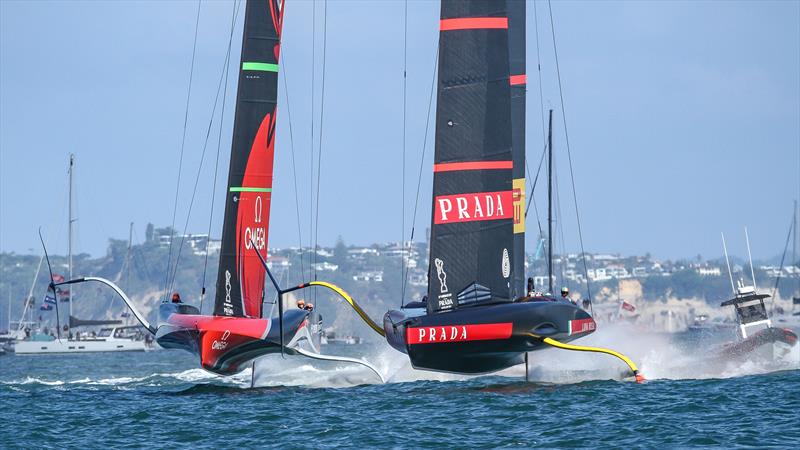
With just over two weeks remaining before the announcement of the venue for the 37th America's Cup, Ireland and specifically County Cork, have put forward a compelling case, including support from top politicians.
Three other venues are in the mix including Auckland, Valencia, and a Middle Eastern venue, reported to be Jeddah.
With just over two weeks before the venue announcement, the bidding has gained a new energy, and as with the 2021 America's Cup venue, the final decision may not be made until the final hours.
The Irish bid has strong political support, a factor which is lacking in Auckland - which would normally be automatic choice to host the 37th America's Cup. Its America's Cup bid is hitched to another major project - Global Ireland 2025, a multi-faceted strategy launched in 2018 to recover from its lost decade. The Cup hosting will turbo-charge that project. The other hosting candidates, may have a similar strategy, but as Auckland and New Zealand have found to their cost - a stand alone Cup hosting inevitably delivers in different ways and quantity to the initial proposals.
Ireland also has a 65% double-jab vaccination rate for COVID, which is a precursor to allowing the nation to open its borders to double-jabbed international fans, sailing media, superyachts, sponsors, and VIPS.
Few of these groups were allowed into Auckland for the 2021 America's Cup robbing the economic value from the New Zealand hosting. New Zealand's double-jab rate is currently less than 22%, with no immediate plan to open its borders to international sports teams and their cohorts.
The venue announcement will be made by America's Cup defender, and reigning champion Royal New Zealand Yacht Squadron and its team Emirates Team New Zealand, on September 17.
Emirates Team New Zealand has consistently refused to release the short-listed venues for AC37, and it may well be that a dark horse is also running in the AC37 stakes.
Cork stakes claim
Cork Harbor, on the south coast of Ireland, is the second largest natural harbor in the world after Sydney Harbor in Australia.
It is understood that 44 acres of waterfront land owned by the Doyle Shipping Group, have been proposed as the site for six team bases. The area has also been earmarked for redevelopment as a staging area for windfarms to be constructed in the Celtic Sea, along with urban renewal planned for several sites adjacent to Cork Harbour. It is likely that the projects will be given some concurrency, with the America's Cup performing its usual role of fast-tracking the planning and construction process.