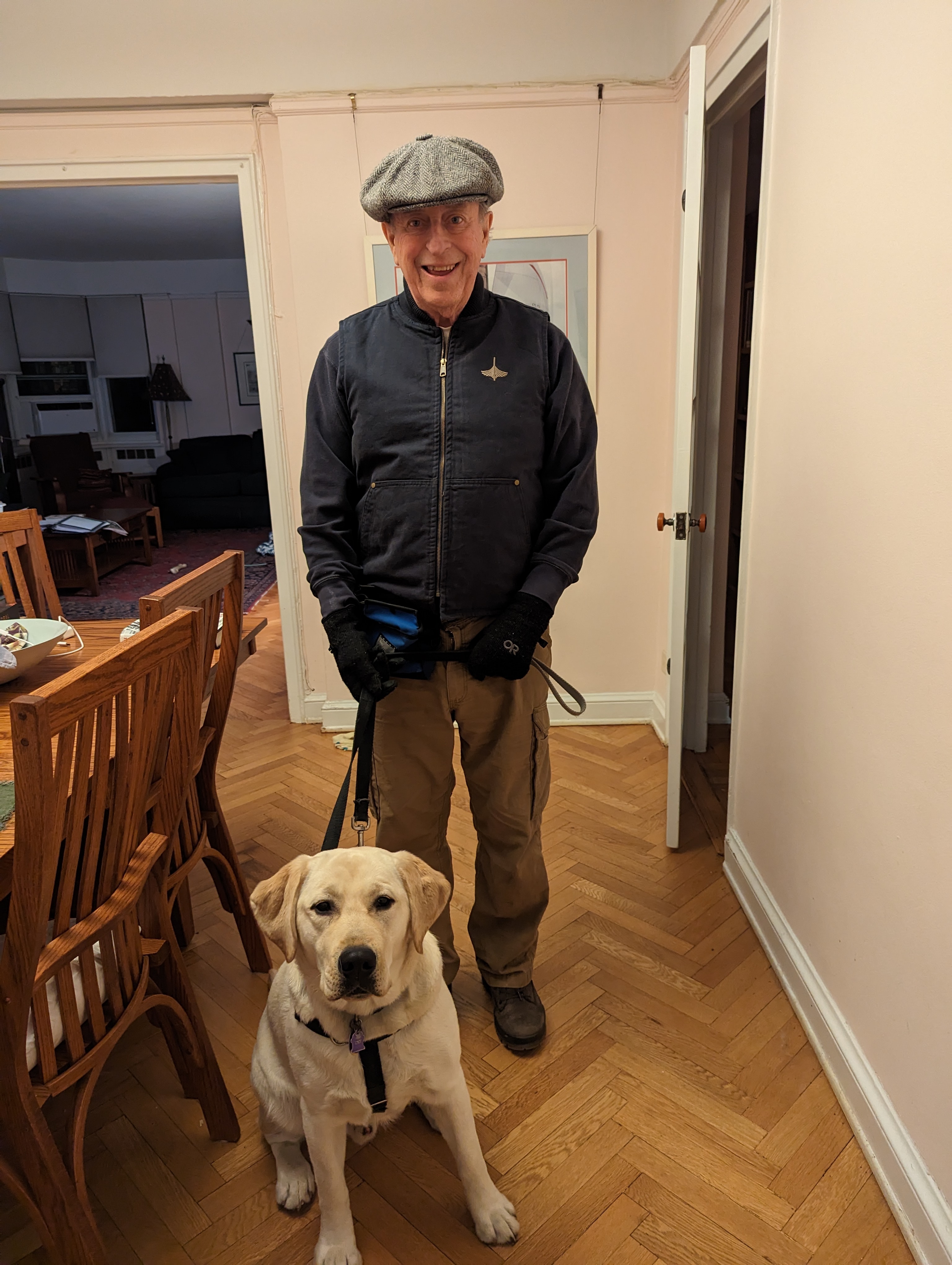
Fergus at 1
George at 77
In September 2010, the main building at the Blackthorne Resort in East Durham burned to the ground. The resort lost its office, dining hall, and bar in the fire, but Kevin Ferguson gained an epiphany.
Ferguson, 55, is a journalist in Arlington, Massachusetts. He grew up in Northern New Jersey. But much of his heart and soul resided at that lost building in the Catskills. As a child, he spent nearly every summer there among a clan of Irish immigrants and first-generation natives in what was known as the Irish Alps.

Adieu to Belashanny!
where I was bred and born;
Go where I may, I'll think of you,
as sure as night and morn.
The kindly spot, the friendly town,
where every one is known,
And not a face in all the place
but partly seems my own;
There's not a house or window,
there's not a field or hill,
But, east or west, in foreign lands,
I'll recollect them still.
I leave my warm heart with you,
tho' my back I'm forced to turn—
Adieu to Belashanny,
and the winding banks of Erne!
No more on pleasant evenings
we'll saunter down the Mall,
When the trout is rising to the fly,
the salmon to the fall.
The boat comes straining on her net,
and heavily she creeps,
Cast off, cast off—she feels the oars,
and to her berth she sweeps;
Now fore and aft keep hauling,
and gathering up the clew,
Till a silver wave of salmon
rolls in among the crew.
Then they may sit, with pipes a-lit,
and many a joke and 'yarn';—
Adieu to Belashanny,
and the winding banks of Erne!
The music of the waterfall,
the mirror of the tide,
When all the green-hill'd harbour
is full from side to side,
From Portnasun to Bulliebawns,
and round the Abbey Bay,
From rocky Inis Saimer
to Coolnargit sandhills gray;
While far upon the southern line,
to guard it like a wall,
The Leitrim mountains clothed in blue
gaze calmly over all,
And watch the ship sail up or down,
the red flag at her stern;—
Adieu to these, adieu to all
the winding banks of Erne!
Farewell to you, Kildoney lads,
and them that pull an oar,
A lug-sail set, or haul a net,
from the Point to Mullaghmore;
From Killybegs to bold Slieve-League,
that ocean-mountain steep,
Six hundred yards in air aloft,
six hundred in the deep,
From Dooran to the Fairy Bridge,
and round by Tullen strand,
Level and long, and white with waves,
where gull and curlew stand;
Head out to sea when on your lee
the breakers you discern!—
Adieu to all the billowy coast,
and winding banks of Erne!
Farewell, Coolmore,—Bundoran! and
your summer crowds that run
From inland homes to see with joy
th' Atlantic-setting sun;
To breathe the buoyant salted air,
and sport among the waves;
To gather shells on sandy beach,
and tempt the gloomy caves;
To watch the flowing, ebbing tide,
the boats, the crabs, the fish;
Young men and maids to meet and smile,
and form a tender wish;
The sick and old in search of health,
for all things have their turn—
And I must quit my native shore,
and the winding banks of Erne!
Farewell to every white cascade
from the Harbour to Belleek,
And every pool where fins may rest,
and ivy-shaded creek;
The sloping fields, the lofty rocks,
where ash and holly grow,
The one split yew-tree gazing
on the curving flood below;
The Lough, that winds through islands
under Turaw mountain green;
And Castle Caldwell's stretching woods,
with tranquil bays between;
And Breesie Hill, and many a pond
among the heath and fern,—
For I must say adieu—adieu
to the winding banks of Erne!
The thrush will call through Camlin groves
the live-long summer day;
The waters run by mossy cliff,
and banks with wild flowers gay;
The girls will bring their work and sing
beneath a twisted thorn,
Or stray with sweethearts down the path
among the growing corn;
Along the river-side they go,
where I have often been,
Oh, never shall I see again
the happy days I've seen!
A thousand chances are to one
I never may return,—
Adieu to Belashanny,
and the winding banks of Erne!
Adieu to evening dances,
when merry neighbours meet,
And the fiddle says to boys and girls,
'Get up and shake your feet!'
To 'seanachas' and wise old talk
of Erin's days gone by—
Who trench'd the rath on such a hill,
and where the bones may lie
Of saint, or king, or warrior chief;
with tales of fairy power,
And tender ditties sweetly sung
to pass the twilight hour.
The mournful song of exile
is now for me to learn—
Adieu, my dear companions
on the winding banks of Erne!
Now measure from the Commons down
to each end of the Purt,
Round the Abbey, Moy, and Knather,—
I wish no one any hurt;
The Main Street, Back Street, College Lane,
the Mall, and Portnasun,
If any foes of mine are there,
I pardon every one.
I hope that man and womankind
will do the same by me;
For my heart is sore and heavy
at voyaging the sea.
My loving friends I'll bear in mind,
and often fondly turn
To think of Belashanny,
and the winding banks of Erne.
If ever I'm a money'd man,
I mean, please God, to cast
My golden anchor in the place
where youthful years were pass'd;
Though heads that now are black and brown
must meanwhile gather gray,
New faces rise by every hearth,
and old ones drop away—
Yet dearer still that Irish hill
than all the world beside;
It's home, sweet home, where'er I roam
through lands and waters wide.
And if the Lord allows me,
I surely will return
To my native Belashanny,
and the winding banks of Erne.


