Sunday, February 28, 2021

Alexia Barrier (TSE 4 MyPlanet) finishes 24th - Vendée Globe - En


Alexia Barrier crosses the finish line


 Alexia Barrier (TSE 4 MyPlanet) finishes 24th  - Vendée Globe - En

On a perfect Sunday morning, 28th February, at  06 23 44 hrs UTC  French skipper Alexia Barrier crossed the finish line of the ninth Vendée Globe off Les Sables d'Olonne to finish her race in 24th position of the 33 skippers who started the race on Sunday 8th November. Racing the oldest boat in the fleet, the 41 year old Mediterranean skipper showed great stamina and tenacity for a passage time of 111 days, 17 hours, 03 minutes, her race always reflecting her great enthusiasm and her huge appetite for life.

Her race achieves her ongoing objective of publicising her wider concern for the environment, promoting better, sustainable practices, backed up by an extensive education programme for young people. Racing a boat launched in 1998 she extends the storied round the world racing history with  completes the seventh lap of the planet for ‘the Penguin’ an IMOCA which was designed by Marc Lombard for Catherine Chabaud's Vendée Globe 2000.

Her ability to take on the Vendée Globe was only really cemented in September last year, two months before the start when TSE, a French solar energy company sign up at the last minute as her major sponsor. And so beyond the challenge of the race itself Barrier is committed to supporting scientific research and raising public awareness of the importance of ocean science in the protection of the seas and the sustainable use of marine resources.

As part of a partnership signed between the IMOCA Class and the Intergovernmental Oceanographic Commission (IOC) of UNESCO, Barrier sailed with a thermosalinograph, a mini laboratory that allows her to collect water samples taking temperatures, salinity and CO2 from all along the course. She also deploys a Météo France buoy and an ARGO float.

After the start she is quickly into her rhythm. Regardless of the tough conditions of the first few days Barrier is always pushing hard and usually smiling and in harmony with her older boat. “It requires a lot of attention, trimming and adjustments and is very physical but dependable but I love my Penguin!” she said.

One day after her passage of the Equator, on November 26, Alexia turns 41 "There is no better way to spend a birthday than at sea." She says.

Her first time in the big south

Before the start Barrier spoke about the deep south, saying, "I'm really not making a big deal out of it, I'm just waiting to be there to experience it when I am there and take it all as it comes. We can’t worry and predict about what lies ahead.”

Even so as she approaches the Roaring 40s there she has an air of slight trepidation,
"I'm glad there are people around, that comforts me. We are competitors but we take care of each other. I hope we will stay together."

Such is the sunny outlook and positive mindset which always underpins her race, always happy to communicate and share her feelings, more than once entertaining with her singing and dancing with a sheer joie de vie.

In mid-December as she passes South Australia, she said "I'm smiling, I'm starting to get used to the conditions."

At Christmas Barrier is tested with a very unwelcome gift, her starboard runner block explodes:
"The mast went forward and I thought in an instant it was all over. I immediately rolled my J2 and gybed I was terrified!"

She employed an ingenious way to check for any damage hoisting her Go Pro up the mast A few days later she reflects:

"I'm happy to be here, everything is going pretty well. There are much more serious things in life than breaking a block."

The skipper of TSE-4myplanet is not spared further challenges. The ten days approaching Cape Hor are particularly complicated with big winds and seas, an unrelenting challenge describes as "intense and violent."

But in spite of everything, she continues to rave about the adventure she is enjoying.

"Cape Horn, you finally deserve it when you are there. And the South is a great experience: there are lights, clouds, absolutely fantastic sunrises and sunsets! "

Even under the worst conditions she shows typical perseverance and good humour.
"I try to take on problems with a smile. You don't have to live them under a black cloud, you have to solve it and enjoy having solved it until the next one."

She counts on on the little notes and photos she finds in her food bags throughout this period. "I have lots of blue post-it notes and a bit of encouragement. I had prepared 50 photos, I draw one out at random every day, it makes me smile. These are photos of my friends and relatives, photos of boats, of my Mini, more artistic photos, a photo of SOS Mediterranean."

Throughout her race, Alexia always repeats. "Competing in the Vendée Globe is such a privilege."

After Cape Horn and her deliverance from the south, the ascent of the Atlantic promises to be more serene, with a relatively benign doldrums "I had 36 hours with squalls that made my life difficult but not for long."

But on February 15, a little over a week before the arrival at Les Sables d'Olonne, the sailor had a bad fall while dressing and hurt her back.

She is quite immobilised by the intense pain to the end, but true to herself she pushes her injured body until she achieves her goal competing the race wearing her big smile and her head held high "I am not fed up about my back I will soon have completed my Vendée Globe and that's all that matters." She said a few days before her finish.

Asked before the start "What is your main quality?"  she replied instantly "My fighting spirit".

Completing her Vendée Globe today proves that is only but one of her many qualities but probably the one which got her to the finish line.

ALEXIA BARRIER'S STATS

She covered the 24,365 miles of the theoretical course at an average speed of 9.09 knots.
Distance actually traveled on the water: 28 170 miles at 10.51 knots on average

THE GREAT PASSAGES

Equator
25th on 25/11/2020 22:08 UTC after 17d 08h 48min of race, 7d 08h 49min after Alex Thomson (HUGO BOSS)

Cape of good hope
21st on 12/11/2020 05h51 UTC after 32d 16h 31min of race, 10d 06h 40min after Charlie Dalin (Apivia)

Cape Leeuwin
25th on 12/27/2020 11:48 UTC after 49d 10h 28min of race, 14d 12h 22min after Charlie Dalin (Apivia)

Cape Horn
24th 24/01/2021 21:55 UTC after 77d 08h 35min of race, 22d 08h 12min after Yannick Bestaven (Maître CoQ IV)

Equator (back)
24th 11/02/2021 22:35 UTC after 95d 09h 15min of race, 26d 03h 23min after Louis Burton (Bureau Vallée 2)

Her boat

Architect: Marc Lombard
Construction site: MAG France, Fontenay-le-Comte
Launched: 1997


Saturday, February 27, 2021

Thursday, February 25, 2021

Wednesday, February 24, 2021

Saturday, February 20, 2021

Woodbanks! - When There’s No Heat: ‘You Need Wood, You Get Wood’ - The New York Times

We're small, energetic and an average age of 75!


When There’s No Heat: ‘You Need Wood, You Get Wood’ - The New York Times

The H.O.M.E. wood bank was designed for such emergencies. It is small, providing “bridge assistance,” often while people wait for state services. Ms. Hair said she expected increased need this winter. “There are people who wouldn’t qualify for state heating assistance, but desperately need some help this year because of Covid,” she said, right before dashing inside to put on warmer socks. “We don’t want more people to come into homelessness.”

Ms. Hair said she expected climate change to increase need as well. Warming temperatures — the state’s average annual temperature has risen 3.2 degrees Fahrenheit since the late 1800s, according to a 2020 report by the University of Maine — have led to more winters without an insulating blanket of snow. “In an open winter, pipes tend to freeze more,” said Ms. Hair, noting that people who live in trailers are particularly vulnerable to such damage.

Severe weather events, like the snowstorms that have hit Texas, can trigger major power failures, which have been on rise, according to a report by Climate Central. As part of their climate resiliency plans, at least a few Northeastern towns have recommended creating wood banks for when the grid fails.


The Boothbay Woodchucks woodbank


Thursday, February 18, 2021

K2: Nirmal Purja Speaks About Ropes, O2, and the Summit Plan » Explorersweb

K2: Nirmal Purja Speaks About Ropes, O2, and the Summit Plan » Explorersweb

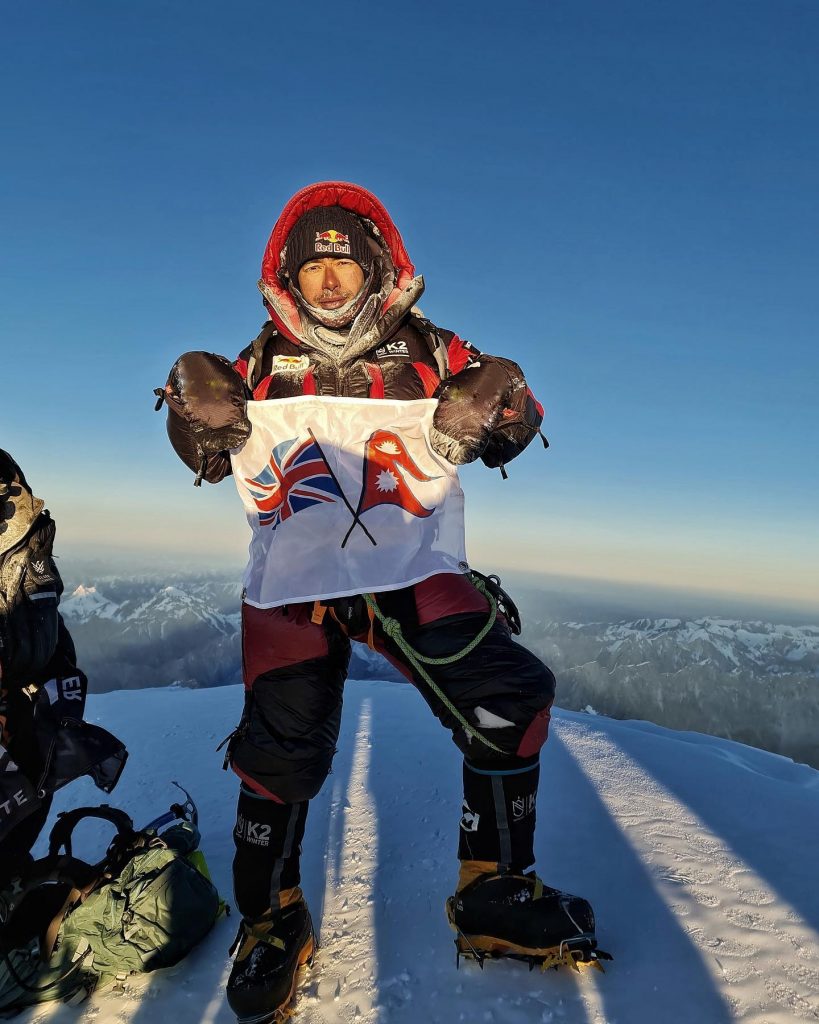
In an interview on Bulgarian national television yesterday, Nirmal Purja confirmed that the Nepali team fixed all the upper sections of K2 as they headed for the summit.

“On the previous rotation we fixed from Camp 2, and on the summit day we fixed everything to the summit, and that’s purely because I knew we would be descending in the night,” said Purja. He added that they had previously planned to fix the whole route for safety reasons.

Purja on the summit of K2.

Purja’s comments echo Mingma G’s, who mentioned that descent was rather straightforward, thanks to the fixed ropes.

This contradicts Pakistani climbing legend Nazir Sabir’s recent speculations. Last week, Sabir accused the Nepali climbers of retrieving the ropes as they returned from the summit, implying that this could have affected the safety of John Snorri, Ali Sadpara, and Juan Pablo Mohr, who went missing during their own summit push on February 5.

Purja declined to comment about what happened at Camp 3, when the Seven Summit Treks climbers found so few tents for so many people, saying that he was not there at the time. But he did suggest how to prevent such events from happening in the future: “[Plan] everything meticulously, check everything in advance, and have contingency plans,” he said.

Saturday, February 13, 2021

Teamwork not solo - Nepali Climbers Conquer K2

I have often said that my favorite genre of entertainment reading is "men in bad weather".  It was the Museum of Natural History's famous exhibition of the famous Shackleton expedition to Antarctica which ended with the Endurance crushed in the ice and months spent on an ice floe before a harrowing escape to the granite Elephant Island - the last possible landing spot.  They were rescued by Ernest Shackleton's 500 mile small boat journey to South Georgia Island, a Norwegian whaling station.  He returned to Elephant Island, failed, came back in a second ship and plucked every man from the rocks.  Then he went to New Zealand, chartered a ship and retrieved the supply ship waiting for him on the far side of the continent.

That obsession was followed by Southern Ocean storms, Arctic expeditions, explorers and athletes racing sailboats across oceans.  But mountain climbing has rarely reached me - except for Jon Krakauer's Into Thin Air - a first person chronicle of a high fatality season on Everest.

Recently I have followed Colin O'Brady on Instagram with a feeling of unease about his self promotion.  I am not alone.  Krakauer is among his critics in a National Geographic article.

O'Brady pitched his K2 winter attempt - cooperating with Seven Summits Treks @sevensummittreks - as an upcoming individual triumph.  But instead he wisely retreated from the highest base camp.  As did two others - O'Brady's friend Jon Kedrowski and Bulgarian Atanas Skatov, who fell to his death.  Similarly Boston critical care physician Alex Goldfarb fell on another mountain in the range.

The honors for first to summit fell to the Nepali Sherpa team of ten who summitted together Teamwork is the key to their success.  But even their triumph was not theirs alone.  Icelander John Snorri and Pakistani Ali Sadpara had set ropes the season before.  Tragically Snorri, Sadpara, and Chilean Juan Pablo Prieto tried to follow in the footsteps of the Nepali team...and were lost on the mountain.

Where does this leave me?  Valuing teamwork above all, while asking whether this sort of thing should be undertaken at all.

Below are two videos that will give you the chance to decide where you stand on the nature of the beauty and the effort.  The first introduces you to the Nepali team which accomplished the first winter climb of K2.  The second is a 46 minute film about an Eddie Bauer sponsored summer K2 expedition.


Tuesday, February 9, 2021

A Glimpse of a Bygone Life on the Shetland Islands, Plucked From the Trash - The New York Times


A Glimpse of a Bygone Life on the Shetland Islands, Plucked From the Trash - The New York Times

LONDON — After working for years at a recycling center in the Shetland Islands, at the northernmost reaches of the British Isles, Paul Moar is used to helping the public get rid of unwanted items.

But when an older man walked into the recycling center in Lerwick, the capital of the archipelago in the North Atlantic, carrying two large bags heaving with old photograph slides, he quickly realized that this intended trash might be worth keeping.

In the bags, he found a wealth of old pictures of the Shetland Islands taken in the 1960s and ’70s — old farmers shearing sheep by hand, views of dirt roads winding between small stone houses, and fishers rowing small dinghies ashore.

Hopes Fade For 3 Missing Climbers On K2, Last Seen 3 Days Ago - Rock and Ice


The picture of strength and health - each of the three men lost on K2.  Those who climb these mountains are that.  If you click through for their photos you'll see what I mean.
Why one would try to climb a rock like this in brutally cold weather I do not know.  I can only guess that if you have that kind of strength there must be great joy in experiencing it, in building it, exulting in the glory of the vistas.  But the cold...wind...Maybe it's the solidarity too.
John Snorri site
Hopes Fade For 3 Missing Climbers On K2, Last Seen 3 Days Ago - Rock and Ice

As of 3:30 am, Monday, February 8, 2021,(Pakistan Standard Time), John Snorri, Muhammad Ali Sadpara, and Juan Pablo (JP) Mohr Prieto remain missing, with no trace of them found after multiple helicopter searches.

We are learning more about what happened at the Bottleneck directly from Ali’s son, Sajid. Of note, he said he and his father were climbing without supplemental oxygen but had a bottle in their pack for emergencies. Also, when he left the three missing climbers, they had no radio or satellite phone. He believes they summited and had an accident on the descent in the Bottleneck, but he cannot be sure.

There has been no official communication from Snorri or Ali or JP’s home teams to the public.

Saturday, February 6, 2021

After Sherpas triumph, three Climbers lost on K2


Missing on the mountain


February 6, 2021

With options for travel few, and Everest closed, alpinist adventurers settled on the idea of a winter assault on K2 which had never been climbed. Some signed on with Seven Summits Trekking., American Colin O'Brady pitched his own effort as a first - like his Antarctica trek and his rowing across the Drake Passage team.  [Since his "first" solo crossing of Antarctica I've been following Colin O'Brady on IG - with a bit of skepticism prompted by his shameless self-promotion.  It appears that there are a lot of critics.  See The problem with Colin O’Brady National Geographic.]
But the glory was taken by a team of ten Sherpas who accomplished the first successful winter climb to the summit of Pakistan's K2 - the world's second highest mountain.

Fortunately he has avoided death on K2. When he got to the Base Camp the ten Sherpa Nepali team had already summited, so no record there.  O'Brady, like his climbing partner,  Jon Kedrowski @drjonkedski headed to the high Camp 3 (24K feet).  But after four hours Kedroski decided it was not to be.  Kedrowski retreated safely.  O'Brady climbed to Camp 3 - 24,000 feet.  Then he too decided not to try to summit.  Bulgarian Atanas Skatov @atanasskatovathlete descended an hour earlier but fell to his death, his body recoverd by a Pakistani helicopter.  
Alas three other climbers unwisely took the risk.  Thirty hours after leaving Camp 3 for the summit their GPS trackers had died, and likely the climbers John Snorri (Iceland), Ali Sadpara (Pakistan), and Juan Pablo “JP” Mohr Prieto (Chile). It now appears that there is no real hope.  A Pakistani helicopter was able to get to only 7,000 meters, 3,000 below where the last GPS signal was received.  Ali Sadpara's son Sajid - who had turned back when his oxygen regulator failed - has now retreated to camp 1, holding out no real hope for his father and fellow climbers.  A rescue mission is underway.